Care lab · material × construction × situation

Care & Durability Checker

Choose the BE. piece you own, confirm its construction, and see which component sets the safest care boundary.

1. Choose your piece

Selected product · Live PDP verified

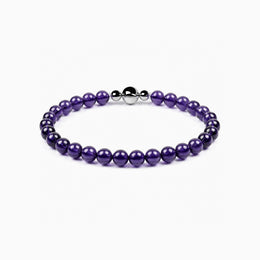
Bolivian Amethyst 6mm Strand Bracelet

Macrocrystalline quartz

Open PDP
BE. Bolivian Amethyst 6mm strand bracelet with round magnetic clasp
Actual BE. product imageCurrent round magnetic clasp
BE. Bolivian Amethyst 6mm strand bracelet with round magnetic clasp

Verified current construction

Stainless-steel wire core + round magnetic clasp

The wire is internal; the round clasp is visible in the exact product photograph.

2. Which version do you own?

3. What will it meet?

3. Choose a situation

Buying rather than caring? Section 4, The Build covers elastic, knotted thread and clasps.

Method · reviewed 20 August 2026

The weakest relevant component sets the verdict.

Material fact. Hardness, toughness and stability are separate. Mohs hardness alone cannot predict daily wear.

Product fact. Each selection uses its current verified PDP image and construction record. Blue Smoky Quartz remains elastic; it is not forced into a wire-and-clasp state.

BE. care policy. A bare stone that tolerates warm soapy cleaning does not make a drilled bracelet waterproof. The final verdict uses the more conservative material or construction boundary.

Static reference library · 18 materials

Full care profiles

These complete answers remain readable without operating the checker. Every profile separates mineral facts, product construction and BE. finished-object policy.

Static situation guide · finished bracelets

What to do in 15 real-life situations

The checker combines each material with the construction you own. These rules stay visible for search and reference even without JavaScript.

Ordinary or long low-impact wear

Use the selected stone's own daily-wear boundary. A long desk or city day is not the same exposure as a full day of gym, gardening, childcare, luggage handling or manual work.

Sleep

Remove the bracelet. Open wire editions at the round magnetic clasp; roll elastic editions gently over the hand. Store wire in a relaxed curve and elastic flat and unstretched.

Exercise, sweat, manual work and impact

Remove the complete piece before the gym, running, weights, gardening, sport and rough work. Steel wire does not protect a stone from a blow, and repeated stretch can damage elastic.

Stacking beside harder jewellery or a watch

Use separation when the selected material can scratch or be scratched. Moonstone, kyanite, prehnite and obsidian need especially conservative non-stacked wear.

Hand washing or accidental splash

A splash is recoverable, not routine care. Blot elastic and air-dry it flat; dry every bead hole and the round clasp seam on wire editions before storage.

Shower, bath, pool or sea

Remove every finished bracelet first. Warm-soapy cleaning advice for an intact bare stone does not certify cord, wire, clasp, crimps, drill holes or every bead for repeated wetting, chlorine or salt.

Ordinary daylight

Follow the material profile. Normal movement through daylight is different from leaving a piece fixed in strong light; amethyst carries a specific prolonged-intense-light fading warning.

Prolonged sun, windowsill or hot car

Do not leave any finished bracelet where heat accumulates. Light-stable garnet and aquamarine still receive a LIMIT verdict in this combined scenario because a hot dashboard is a heat exposure.

Sauna, high heat or sudden temperature change

Remove the piece. Do not steam-clean it or cool a hot stone suddenly in water; let it return to room temperature naturally and inspect for cracks or a damaged fitting.

Perfume, cosmetics and household cleaners

Apply cosmetics first, let them dry, then put jewellery on. Remove the bracelet completely before household cleaners or solvents; keep residue out of elastic, bead holes and clasp seams.

Ultrasonic or steam cleaning

Do not put the complete drilled-bead strand into either machine. A conditional loose-stone allowance does not extend to every bead, treatment, fracture, cord, wire or clasp.

Storage and travel

Store clean, dry and separate in a padded pouch. Keep elastic flat and unstretched; keep wire flat or in a relaxed curve, never sharply folded.

Method sources. GIA durability framework · BE. construction and care record. Last reviewed 20 August 2026.

№ 01 · The Anchor Reviewed 20 August 2026

How to care for Gold Sheen Obsidian jewellery

Direct answer. Wear in low-impact rotation. It scratches more easily than quartz, aquamarine and garnet, and a hard knock can chip an edge or drill hole.

Mohs / exterior5–5.5
Toughness / cleavageBrittle glass; no mineral cleavage
Ordinary daylightSUITABLE
High heat / sudden changeREMOVE
Care boundaries

Water and hand cleaning

Use a soft dry cloth. If needed, use a brief barely damp mild-soap wipe, then dry the bead holes and clasp completely. A bare-stone cleaning method is not permission to wear the complete bracelet in water.

Sun and ordinary light

Ordinary daylight is reasonable. No gold-sheen-specific fading threshold was located, so this is not a promise of universal light stability. Do not leave the object to accumulate heat on a windowsill or dashboard. A fixed safe-hour threshold is not supported.

Heat and temperature change

Volcanic glass is brittle and moderately heat-sensitive. Avoid high heat and abrupt temperature change.

Impact, abrasion and stacking

Remove before sport, weights, gardening, manual work or contact with stone, metal and concrete.

Ultrasonic and steam

Avoid. Hidden fractures in brittle glass may chip under vibration. Avoid heat and thermal stress.

Current product construction

Steel wire + round magnetic clasp. Open at the round magnetic clasp, not by pulling the beads or wire. Keep the complete strand out of showers, baths, pools, sea water, saunas, hot tubs, ultrasonic cleaners and steam. Clean with a dry or barely damp cloth, dry the clasp seam and bead holes, then store flat or in a relaxed curve.

Earlier elastic edition

Roll the bracelet over the hand without pulling individual beads or stretching the loop wide. Keep it out of showers, baths, pools, sea water, saunas, hot tubs, ultrasonic cleaners and steam. Store it flat, dry and unstretched; stop wearing it if the cord whitens, frays, loosens or remains elongated.

Storage and travel

Store alone in a padded pouch; do not stack against harder beads or a watch.

Identification boundary

A fresh obsidian fracture can be sharp. Stop wearing a chipped bead until it is inspected.

Evidence boundary. No stone-specific consumer light-stability study was located. The weakest relevant component—stone, drill edge, wire or elastic, and clasp—sets the finished object's verdict.

Sources. GIA · More than Mohs · GIA · Caring for jewellery · IGS · Glass. Product construction: current BE. PDP. Last reviewed 20 August 2026.

№ 02 · The Void Reviewed 20 August 2026

How to care for Amethyst jewellery

Direct answer. Suitable for regular low-impact wear. Time alone is not the risk; repeated strong sun, heat, hard contact and wet–dry cycles are.

Mohs / exterior7
Toughness / cleavageGood toughness; brittle fracture
Ordinary daylightSUITABLE
High heat / sudden changeREMOVE
Care boundaries

Water and hand cleaning

Warm soapy water is safe for an intact bare stone, but the assembled strand should be wiped rather than immersed. A bare-stone cleaning method is not permission to wear the complete bracelet in water.

Sun and ordinary light

Brief ordinary daylight is compatible with normal wear. Some amethyst colour can fade after repeated prolonged intense light. Normal outdoor wear is not the same as leaving it on a sunny windowsill, dashboard or every beach day.

Heat and temperature change

Do not subject amethyst to heat; abrupt temperature change can create fractures. No sauna, hot tub, steam or hot-air drying.

Impact, abrasion and stacking

Good toughness is not impact-proof. Remove it for weights, gardening, sport and hands-on work.

Ultrasonic and steam

A verified untreated, unfilled and unfractured loose stone is usually compatible. The complete drilled-bead strand is not. Steam cleaning is not recommended.

Current product construction

Stainless-steel wire core + round magnetic clasp. Open at the round magnetic clasp, not by pulling the beads or wire. Keep the complete strand out of showers, baths, pools, sea water, saunas, hot tubs, ultrasonic cleaners and steam. Clean with a dry or barely damp cloth, dry the clasp seam and bead holes, then store flat or in a relaxed curve.

Earlier elastic edition

Roll the bracelet over the hand without pulling individual beads or stretching the loop wide. Keep it out of showers, baths, pools, sea water, saunas, hot tubs, ultrasonic cleaners and steam. Store it flat, dry and unstretched; stop wearing it if the cord whitens, frays, loosens or remains elongated.

Storage and travel

Store dry, separately and away from prolonged strong light.

Identification boundary

There is no evidence-based universal number of safe sun hours.

Evidence boundary. Product-level fracture and treatment status controls machine-cleaning safety. The weakest relevant component—stone, drill edge, wire or elastic, and clasp—sets the finished object's verdict.

Sources. GIA · Amethyst care · Handbook of Mineralogy · Quartz · GIA · Ultrasonic cleaners. Product construction: current BE. PDP. Last reviewed 20 August 2026.

№ 03 · The Prism Reviewed 20 August 2026

How to care for Citrine jewellery

Direct answer. Suitable for regular low-impact wear, with strong sun, heat and hard knocks kept outside the routine.

Mohs / exterior7
Toughness / cleavageGood toughness; brittle fracture
Ordinary daylightSUITABLE
High heat / sudden changeREMOVE
Care boundaries

Water and hand cleaning

Warm soapy water is safe for an intact bare stone; wipe the assembled strand instead of soaking it. A bare-stone cleaning method is not permission to wear the complete bracelet in water.

Sun and ordinary light

Ordinary daylight is compatible with normal use. Some citrine colour may fade after prolonged intense light. Do not make a sunny windowsill, hot car or repeated all-day beach exposure routine.

Heat and temperature change

Abrupt temperature change can fracture citrine and heat may alter colour.

Impact, abrasion and stacking

The quartz surface resists ordinary scratches, but drill edges and existing fractures can still chip.

Ultrasonic and steam

Usually safe only for an untreated and unfractured loose stone. Avoid for the finished strand. Steam is risky because citrine should not be subjected to heat.

Current product construction

Stainless-steel wire core + round magnetic clasp. Open at the round magnetic clasp, not by pulling the beads or wire. Keep the complete strand out of showers, baths, pools, sea water, saunas, hot tubs, ultrasonic cleaners and steam. Clean with a dry or barely damp cloth, dry the clasp seam and bead holes, then store flat or in a relaxed curve.

Earlier elastic edition

Roll the bracelet over the hand without pulling individual beads or stretching the loop wide. Keep it out of showers, baths, pools, sea water, saunas, hot tubs, ultrasonic cleaners and steam. Store it flat, dry and unstretched; stop wearing it if the cord whitens, frays, loosens or remains elongated.

Storage and travel

Store dry and separate from harder jewellery.

Identification boundary

Natural and heat-produced yellow colour histories both exist; appearance alone does not establish treatment.

Evidence boundary. Product-level colour history and fracture status are not established by appearance. The weakest relevant component—stone, drill edge, wire or elastic, and clasp—sets the finished object's verdict.

Sources. GIA · Citrine care · Handbook of Mineralogy · Quartz · GIA · Gem treatments. Product construction: current BE. PDP. Last reviewed 20 August 2026.

№ 04 · The Flow Reviewed 20 August 2026

How to care for Prehnite jewellery

Direct answer. Choose low-impact, non-stacked rotation wear. Prehnite is softer than quartz and vulnerable along cleavage.

Mohs / exterior6–6.5
Toughness / cleavageBrittle; good cleavage in one direction
Ordinary daylightSUITABLE
High heat / sudden changeREMOVE
Care boundaries

Water and hand cleaning

Use a brief lukewarm mild-soap wipe with a soft cloth or brush. Do not soak; dry drill holes completely. A bare-stone cleaning method is not permission to wear the complete bracelet in water.

Sun and ordinary light

Ordinary indoor and daylight wear is a reasonable conservative use. A laboratory-backed consumer fading threshold was not located. Avoid routine prolonged intense exposure until treatment and colour stability are known.

Heat and temperature change

Cleavage, brittleness and internal features can concentrate thermal stress. Avoid high heat and abrupt change.

Impact, abrasion and stacking

Remove for any manual or impact-heavy activity and keep it away from harder stones.

Ultrasonic and steam

Avoid because cleavage, brittleness and inclusions may increase fracture risk. Avoid heat and thermal stress.

Current product construction

Stainless-steel wire core + round magnetic clasp. Open at the round magnetic clasp, not by pulling the beads or wire. Keep the complete strand out of showers, baths, pools, sea water, saunas, hot tubs, ultrasonic cleaners and steam. Clean with a dry or barely damp cloth, dry the clasp seam and bead holes, then store flat or in a relaxed curve.

Earlier elastic edition

Roll the bracelet over the hand without pulling individual beads or stretching the loop wide. Keep it out of showers, baths, pools, sea water, saunas, hot tubs, ultrasonic cleaners and steam. Store it flat, dry and unstretched; stop wearing it if the cord whitens, frays, loosens or remains elongated.

Storage and travel

Store alone, padded and fully dry.

Identification boundary

The conservative verdict reflects incomplete consumer care evidence, not a claim that prehnite is unwearable.

Evidence boundary. Consumer light and machine-cleaning guidance from a first-party gem laboratory was not located. The weakest relevant component—stone, drill edge, wire or elastic, and clasp—sets the finished object's verdict.

Sources. Handbook of Mineralogy · Prehnite · IGS · Prehnite · GIA · Caring for jewellery. Product construction: current BE. PDP. Last reviewed 20 August 2026.

№ 05 · The Anchor Reviewed 20 August 2026

How to care for Smoky Quartz jewellery

Direct answer. Suitable for regular low-impact wear. This verdict applies to finished jewellery: Mohs 7 describes scratch resistance, but it does not override existing fractures, drilled bead edges, wire or elastic, and clasp limits.

Mohs / exterior7
Toughness / cleavageBrittle; poor or indistinct cleavage
Ordinary daylightSUITABLE
High heat / sudden changeREMOVE
Care boundaries

Water and hand cleaning

Brief lukewarm mild-soap cleaning suits an intact untreated bare stone; wipe the assembled strand. A bare-stone cleaning method is not permission to wear the complete bracelet in water.

Sun and ordinary light

Evidence depends on specimen and conditions: one published GIA light/heat study found no significant fading in the smoky quartz tested, while Mindat reports paling after prolonged UV exposure. Neither source supplies a universal safe-hour threshold for every natural or treated specimen. Ordinary daylight wear is reasonable; avoid long display exposure and do not let the finished strand heat on a windowsill or dashboard.

Heat and temperature change

High heat can anneal smoky colour centres and lighten or alter the brown. Abrupt temperature change can also stress existing fractures and drilled bead edges; remove the finished strand before saunas, steam, hot-car exposure or rapid cooling.

Impact, abrasion and stacking

Remove for rough work, weights and impact; quartz hardness does not prevent chipping.

Ultrasonic and steam

Loose-stone guidance does not authorise machine-cleaning assembled jewellery. For a BE. wire or elastic strand, avoid ultrasonic and steam cleaning: vibration and heat can stress fractures and drill edges and can affect the clasp or stringing.

Current product construction

Stainless-steel wire core + round magnetic clasp. Open at the round magnetic clasp, not by pulling the beads or wire. Keep the complete strand out of showers, baths, pools, sea water, saunas, hot tubs, ultrasonic cleaners and steam. Clean with a dry or barely damp cloth, dry the clasp seam and bead holes, then store flat or in a relaxed curve.

Earlier elastic edition

Roll the bracelet over the hand without pulling individual beads or stretching the loop wide. Keep it out of showers, baths, pools, sea water, saunas, hot tubs, ultrasonic cleaners and steam. Store it flat, dry and unstretched; stop wearing it if the cord whitens, frays, loosens or remains elongated.

Storage and travel

Store dry and separate from harder jewellery.

Identification boundary

Light guidance is a preservation boundary, not a treatment test: colour response cannot establish whether irradiation was natural or controlled.

Evidence boundary. Treatment and irradiation history remain product-specific. The weakest relevant component—stone, drill edge, wire or elastic, and clasp—sets the finished object's verdict.

Sources. Handbook of Mineralogy · Quartz · IGS · Smoky quartz · GIA · Caring for jewellery. Product construction: current BE. PDP. Last reviewed 20 August 2026.

№ 06 · The Flow Reviewed 20 August 2026

How to care for Rose Quartz jewellery

Direct answer. Suitable for regular low-impact wear. Cloudy translucence may include internal fractures, so rough handling still matters.

Mohs / exterior7
Toughness / cleavageDurable for jewellery; brittle fracture
Ordinary daylightSUITABLE
High heat / sudden changeLIMIT
Care boundaries

Water and hand cleaning

Warm soapy water is safe for the bare stone. Wipe the complete strand rather than immersing it. A bare-stone cleaning method is not permission to wear the complete bracelet in water.

Sun and ordinary light

GIA describes rose quartz as generally stable to light. The stone is generally light-stable, but the finished piece should not be left to accumulate heat on a dashboard or sunny sill.

Heat and temperature change

Rose quartz is generally stable to heat, but unnecessary high heat and abrupt temperature change remain poor practice for a drilled strand.

Impact, abrasion and stacking

Avoid harder gems, abrasive surfaces and hard impacts at drilled edges.

Ultrasonic and steam

GIA recommends avoiding ultrasonic cleaning for rose quartz. GIA recommends avoiding steam cleaning.

Current product construction

Steel wire + round magnetic clasp. Open at the round magnetic clasp, not by pulling the beads or wire. Keep the complete strand out of showers, baths, pools, sea water, saunas, hot tubs, ultrasonic cleaners and steam. Clean with a dry or barely damp cloth, dry the clasp seam and bead holes, then store flat or in a relaxed curve.

Earlier elastic edition

Roll the bracelet over the hand without pulling individual beads or stretching the loop wide. Keep it out of showers, baths, pools, sea water, saunas, hot tubs, ultrasonic cleaners and steam. Store it flat, dry and unstretched; stop wearing it if the cord whitens, frays, loosens or remains elongated.

Storage and travel

Store clean, dry and separate.

Identification boundary

A Mohs hardness of 7 describes scratch resistance, not immunity to fracture.

Evidence boundary. Product-specific dye, coating and fracture status remain relevant. The weakest relevant component—stone, drill edge, wire or elastic, and clasp—sets the finished object's verdict.

Sources. GIA · Rose quartz care · Handbook of Mineralogy · Quartz. Product construction: current BE. PDP. Last reviewed 20 August 2026.

№ 07 · The Flow Reviewed 20 August 2026

How to care for Clear Quartz jewellery

Direct answer. Suitable for regular low-impact wear, with care around drill holes, thin edges and existing fractures.

Mohs / exterior7
Toughness / cleavageBrittle; poor or rarely observable cleavage
Ordinary daylightSUITABLE
High heat / sudden changeLIMIT
Care boundaries

Water and hand cleaning

Brief lukewarm mild-soap cleaning is appropriate for an intact untreated bare stone; wipe the complete strand. A bare-stone cleaning method is not permission to wear the complete bracelet in water.

Sun and ordinary light

Untreated colourless quartz has no colour-fade concern relevant to its appearance. Light itself does not remove a colour that is absent, but this scenario also includes heat accumulation in a hot car or on a sunny sill.

Heat and temperature change

Avoid high heat and abrupt temperature change, especially when fractures or liquid inclusions are visible.

Impact, abrasion and stacking

Good scratch resistance does not stop a drilled edge from chipping under a hard blow.

Ultrasonic and steam

Only conditionally compatible when untreated and free of significant fractures. Avoid for the assembled bracelet. Use a conservative avoid because heat can stress fractures and inclusions.

Current product construction

Stainless-steel wire core + round magnetic clasp. Open at the round magnetic clasp, not by pulling the beads or wire. Keep the complete strand out of showers, baths, pools, sea water, saunas, hot tubs, ultrasonic cleaners and steam. Clean with a dry or barely damp cloth, dry the clasp seam and bead holes, then store flat or in a relaxed curve.

Earlier elastic edition

Roll the bracelet over the hand without pulling individual beads or stretching the loop wide. Keep it out of showers, baths, pools, sea water, saunas, hot tubs, ultrasonic cleaners and steam. Store it flat, dry and unstretched; stop wearing it if the cord whitens, frays, loosens or remains elongated.

Storage and travel

Store separately so harder gems and grit cannot abrade the polish.

Identification boundary

Dyed, coated or irradiated products require their own treatment record.

Evidence boundary. No direct GIA clear-quartz consumer care page was located. The weakest relevant component—stone, drill edge, wire or elastic, and clasp—sets the finished object's verdict.

Sources. Handbook of Mineralogy · Quartz · GIA · More than Mohs · GIA · Caring for jewellery. Product construction: current BE. PDP. Last reviewed 20 August 2026.

№ 08 · The Prism Reviewed 20 August 2026

How to care for Hematoid Quartz jewellery

Direct answer. Choose low-impact rotation. An intact quartz exterior can resist scratches, but surface-reaching inclusions, fractures and drill edges can chip.

Mohs / exteriorQuartz exterior ≈ 7
Toughness / cleavageBrittle host; local weakness may follow interfaces
Ordinary daylightSUITABLE
High heat / sudden changeREMOVE
Care boundaries

Water and hand cleaning

Use a brief lukewarm mild-soap wipe; do not soak; dry holes and surface-reaching fractures. A bare-stone cleaning method is not permission to wear the complete bracelet in water.

Sun and ordinary light

Ordinary daylight is a reasonable use while exact inclusion and treatment identity remain product-specific. Avoid prolonged intense exposure until inclusion, fracture and treatment status are known.

Heat and temperature change

Host–inclusion interfaces and fractures may respond differently to heat or abrupt temperature change.

Impact, abrasion and stacking

Inspect the actual bead rather than assuming uniform strength from the quartz host alone.

Ultrasonic and steam

Avoid because the inclusion interfaces and fracture network are specimen-dependent. Avoid heat and pressure on an included composite specimen.

Current product construction

Stainless-steel wire core + round magnetic clasp. Open at the round magnetic clasp, not by pulling the beads or wire. Keep the complete strand out of showers, baths, pools, sea water, saunas, hot tubs, ultrasonic cleaners and steam. Clean with a dry or barely damp cloth, dry the clasp seam and bead holes, then store flat or in a relaxed curve.

Earlier elastic edition

Roll the bracelet over the hand without pulling individual beads or stretching the loop wide. Keep it out of showers, baths, pools, sea water, saunas, hot tubs, ultrasonic cleaners and steam. Store it flat, dry and unstretched; stop wearing it if the cord whitens, frays, loosens or remains elongated.

Storage and travel

Store alone and padded to protect exposed inclusions and drill edges.

Identification boundary

Do not assign every red or brown inclusion to one iron mineral without specimen evidence.

Evidence boundary. Exact iron-rich inclusion phase and surface exposure vary by specimen. The weakest relevant component—stone, drill edge, wire or elastic, and clasp—sets the finished object's verdict.

Sources. Handbook of Mineralogy · Quartz · GIA · Coloured stone inclusions · GIA · Gem treatments. Product construction: current BE. PDP. Last reviewed 20 August 2026.

№ 09 · The Flow Reviewed 20 August 2026

How to care for Emerald Phantom Quartz jewellery

Direct answer. Low-impact rotation only. An intact quartz exterior remains approximately Mohs 7; the greater concern is any surface-reaching fluorite, fracture or drill edge. A visible phantom plane alone is not proof of a weak surface.

Mohs / exteriorQuartz exterior ≈ 7; fluorite 4
Toughness / cleavageQuartz is brittle; fluorite has perfect cleavage
Ordinary daylightLIMIT
High heat / sudden changeREMOVE
Care boundaries

Water and hand cleaning

Use a brief barely damp mild-soap wipe. Do not immerse when fluorite or fractures may reach the surface. A bare-stone cleaning method is not permission to wear the complete bracelet in water.

Sun and ordinary light

Passing ordinary daylight is acceptable, but some fluorite can fade after prolonged light exposure. Avoid prolonged intense sun. Refer to the individual BE. product page for processing and treatment disclosure. No lot-specific light-stability test is published.

Heat and temperature change

Fluorite is vulnerable to heat and temperature change. Avoid both high heat and sudden changes.

Impact, abrasion and stacking

Inspect for exposed inclusions and surface-reaching fractures; do not stack.

Ultrasonic and steam

Avoid: fluorite is cleavage-prone and heat/temperature-change sensitive. Avoid heat and cleavage stress.

Current product construction

Steel wire + round magnetic clasp. Open at the round magnetic clasp, not by pulling the beads or wire. Keep the complete strand out of showers, baths, pools, sea water, saunas, hot tubs, ultrasonic cleaners and steam. Clean with a dry or barely damp cloth, dry the clasp seam and bead holes, then store flat or in a relaxed curve.

Earlier elastic edition

Roll the bracelet over the hand without pulling individual beads or stretching the loop wide. Keep it out of showers, baths, pools, sea water, saunas, hot tubs, ultrasonic cleaners and steam. Store it flat, dry and unstretched; stop wearing it if the cord whitens, frays, loosens or remains elongated.

Storage and travel

Store alone in a padded compartment, fully dry.

Identification boundary

This checker uses the verified Archive bracelet, not the separate multi-material Tri-Wire Codex-linked piece.

Evidence boundary. No independent lot-specific laboratory or light-stability report is cited here; whether fluorite reaches the bead surface remains specimen-specific. The weakest relevant component—stone, drill edge, wire or elastic, and clasp—sets the finished object's verdict.

Sources. Handbook of Mineralogy · Quartz · Handbook of Mineralogy · Fluorite · IGS · Fluorite · GIA · Ultrasonic cleaners. Product construction: current BE. PDP. Last reviewed 20 August 2026.

№ 10 · The Prism Reviewed 20 August 2026

How to care for Green Phantom Quartz jewellery

Direct answer. Low-impact rotation only. The quartz host has good scratch resistance, but drilled fractures and surface-reaching inclusions can chip. A visible phantom plane alone is not proof of weakness.

Mohs / exteriorQuartz exterior ≈ 7
Toughness / cleavageBrittle host; surface-reaching fractures or inclusion boundaries may create local weakness
Ordinary daylightSUITABLE
High heat / sudden changeREMOVE
Care boundaries

Water and hand cleaning

Use a brief lukewarm mild-soap wipe; no soaking; dry drilled edges and fractures. A bare-stone cleaning method is not permission to wear the complete bracelet in water.

Sun and ordinary light

Ordinary indoor and daylight wear is reasonable. Limit prolonged intense sun until inclusion, dye and treatment status are known.

Heat and temperature change

Avoid high heat and abrupt temperature change because inclusion identity and internal stress are unknown.

Impact, abrasion and stacking

Do not stack or expose it to hard knocks.

Ultrasonic and steam

Avoid because fracture and inclusion continuity are unknown. Avoid heat and internal stress.

Current product construction

Steel wire + round magnetic clasp. Open at the round magnetic clasp, not by pulling the beads or wire. Keep the complete strand out of showers, baths, pools, sea water, saunas, hot tubs, ultrasonic cleaners and steam. Clean with a dry or barely damp cloth, dry the clasp seam and bead holes, then store flat or in a relaxed curve.

Earlier elastic edition

Roll the bracelet over the hand without pulling individual beads or stretching the loop wide. Keep it out of showers, baths, pools, sea water, saunas, hot tubs, ultrasonic cleaners and steam. Store it flat, dry and unstretched; stop wearing it if the cord whitens, frays, loosens or remains elongated.

Storage and travel

Store alone and padded.

Identification boundary

Do not automatically identify the green inclusion as chlorite.

Evidence boundary. Inclusion identity, treatment and surface exposure remain specimen-dependent. The weakest relevant component—stone, drill edge, wire or elastic, and clasp—sets the finished object's verdict.

Sources. Handbook of Mineralogy · Quartz · GIA · Coloured stone inclusions · GIA · Gem treatments. Product construction: current BE. PDP. Last reviewed 20 August 2026.

№ 11 · The Flow Reviewed 20 August 2026

How to care for Aquamarine jewellery

Direct answer. Aquamarine has the highest stated scratch-resistance range in this set and suits regular low-impact wear. The mapped bracelet also contains clear quartz, and the finished structure still controls water and impact rules.

Mohs / exterior7.5–8
Toughness / cleavageDurable with care; inclusions can change cleaning risk
Ordinary daylightSUITABLE
High heat / sudden changeREMOVE
Care boundaries

Water and hand cleaning

Warm soapy water is safe for an intact bare aquamarine. Wipe the assembled dual-mineral strand instead of immersing it. A bare-stone cleaning method is not permission to wear the complete bracelet in water.

Sun and ordinary light

Aquamarine colour is stable to light. Aquamarine is light-stable, but this combined scenario also includes heat accumulation in a hot car or on a sunny sill.

Heat and temperature change

Heat is not recommended; fractures and liquid inclusions may expand or worsen.

Impact, abrasion and stacking

High scratch resistance is not immunity to hard blows.

Ultrasonic and steam

Conditional only when untreated and without liquid inclusions or fractures. Conditional only for intact untreated material; the finished strand remains excluded.

Current product construction

Steel wire + round magnetic clasp. Open at the round magnetic clasp, not by pulling the beads or wire. Keep the complete strand out of showers, baths, pools, sea water, saunas, hot tubs, ultrasonic cleaners and steam. Clean with a dry or barely damp cloth, dry the clasp seam and bead holes, then store flat or in a relaxed curve.

Earlier elastic edition

Roll the bracelet over the hand without pulling individual beads or stretching the loop wide. Keep it out of showers, baths, pools, sea water, saunas, hot tubs, ultrasonic cleaners and steam. Store it flat, dry and unstretched; stop wearing it if the cord whitens, frays, loosens or remains elongated.

Storage and travel

Store dry and separate from harder materials.

Identification boundary

This is a dual-mineral object; the more conservative relevant material or construction sets the verdict.

Evidence boundary. Liquid inclusions, fracture filling and treatment require product-level inspection. The weakest relevant component—stone, drill edge, wire or elastic, and clasp—sets the finished object's verdict.

Sources. GIA · Aquamarine care · GIA · Ultrasonic cleaners · Handbook of Mineralogy · Quartz. Product construction: current BE. PDP. Last reviewed 20 August 2026.

№ 12 · The Flow Reviewed 20 August 2026

How to care for Moonstone jewellery

Direct answer. Wear in low-impact rotation, ideally on the non-dominant wrist. It is not too fragile to wear; it is too directional in weakness to promise careless daily use.

Mohs / exterior6–6.5
Toughness / cleavagePoor toughness; two cleavage directions
Ordinary daylightSUITABLE
High heat / sudden changeREMOVE
Care boundaries

Water and hand cleaning

Warm soapy water is the recommended bare-stone cleaning method. Clean briefly and gently; do not convert that into a soaking rule. A bare-stone cleaning method is not permission to wear the complete bracelet in water.

Sun and ordinary light

Moonstone is stable to light. Ordinary daylight does not carry the amethyst-style fading warning. The concern is accumulated heat, not proven fading. Do not leave it on a hot windowsill or dashboard.

Heat and temperature change

High heat or sudden temperature change can break moonstone.

Impact, abrasion and stacking

A single hard blow can split it along cleavage. Do not let it rub or knock against amethyst, garnet, a watch or another bracelet.

Ultrasonic and steam

Never use ultrasonic cleaning. Never use steam cleaning.

Current product construction

Stainless-steel wire core + round magnetic clasp. Open at the round magnetic clasp, not by pulling the beads or wire. Keep the complete strand out of showers, baths, pools, sea water, saunas, hot tubs, ultrasonic cleaners and steam. Clean with a dry or barely damp cloth, dry the clasp seam and bead holes, then store flat or in a relaxed curve.

Earlier elastic edition

Roll the bracelet over the hand without pulling individual beads or stretching the loop wide. Keep it out of showers, baths, pools, sea water, saunas, hot tubs, ultrasonic cleaners and steam. Store it flat, dry and unstretched; stop wearing it if the cord whitens, frays, loosens or remains elongated.

Storage and travel

Store alone, padded, dry and without pressure.

Identification boundary

A low-impact desk day can be reasonable; luggage, childcare, gardening, sport and manual work are not equivalent exposures.

Evidence boundary. Exact feldspar species and intergrowth remain specimen-dependent. The weakest relevant component—stone, drill edge, wire or elastic, and clasp—sets the finished object's verdict.

Sources. GIA · Moonstone care · GIA · Caring for jewellery. Product construction: current BE. PDP. Last reviewed 20 August 2026.

№ 13 · The Prism Reviewed 20 August 2026

How to care for Golden Rutilated Quartz jewellery

Direct answer. Regular low-impact rotation. Enclosed rutile does not reduce an intact quartz exterior to rutile hardness, but surface-reaching needles and drill edges can chip.

Mohs / exteriorQuartz exterior ≈ 7
Toughness / cleavageBrittle host; needle interfaces may create local weakness
Ordinary daylightSUITABLE
High heat / sudden changeREMOVE
Care boundaries

Water and hand cleaning

Use a brief lukewarm mild-soap wipe; no soaking; dry drilled edges and exposed needles. A bare-stone cleaning method is not permission to wear the complete bracelet in water.

Sun and ordinary light

Ordinary daylight is a reasonable use when treatment status is known. Avoid routine prolonged intense exposure until treatment and surface-reaching inclusion status are verified.

Heat and temperature change

Host–needle interfaces and fractures may concentrate stress during high heat or abrupt change.

Impact, abrasion and stacking

Inspect drilled edges and surface-reaching needles; avoid stacking and hard blows.

Ultrasonic and steam

Avoid because fracture and needle-interface continuity are specimen-dependent. Avoid heat stress.

Current product construction

Stainless-steel wire core + round magnetic clasp. Open at the round magnetic clasp, not by pulling the beads or wire. Keep the complete strand out of showers, baths, pools, sea water, saunas, hot tubs, ultrasonic cleaners and steam. Clean with a dry or barely damp cloth, dry the clasp seam and bead holes, then store flat or in a relaxed curve.

Earlier elastic edition

Roll the bracelet over the hand without pulling individual beads or stretching the loop wide. Keep it out of showers, baths, pools, sea water, saunas, hot tubs, ultrasonic cleaners and steam. Store it flat, dry and unstretched; stop wearing it if the cord whitens, frays, loosens or remains elongated.

Storage and travel

Store alone and padded.

Identification boundary

Rutile identity and surface exposure must be confirmed at lot or specimen level.

Evidence boundary. Do not infer inclusion identity only from gold-coloured needles. The weakest relevant component—stone, drill edge, wire or elastic, and clasp—sets the finished object's verdict.

Sources. Handbook of Mineralogy · Quartz · Handbook of Mineralogy · Rutile · IGS · Rutilated quartz · GIA · Coloured stone inclusions. Product construction: current BE. PDP. Last reviewed 20 August 2026.

№ 14 · The Prism Reviewed 20 August 2026

How to care for Green Rutilated Quartz jewellery

Direct answer. Low-impact rotation only. Enclosed needles do not reduce an intact quartz surface to actinolite hardness, but exposed fibres and fractures may chip.

Mohs / exteriorQuartz exterior ≈ 7
Toughness / cleavageBrittle host; included needles have cleavage
Ordinary daylightSUITABLE
High heat / sudden changeREMOVE
Care boundaries

Water and hand cleaning

Use a brief lukewarm mild-soap wipe. Do not soak or scrub abrasively; dry drilled edges fully. A bare-stone cleaning method is not permission to wear the complete bracelet in water.

Sun and ordinary light

Ordinary daylight is reasonable while inclusion chemistry and treatment remain lot-specific. Avoid strong universal stability claims and routine prolonged intense exposure until the lot is characterised.

Heat and temperature change

Host–needle interfaces and fractures may respond differently to high heat or abrupt change.

Impact, abrasion and stacking

If fibres become exposed or broken, stop wearing and seek inspection rather than sanding at home.

Ultrasonic and steam

Avoid because needle interfaces, cleavage and fractures are specimen-dependent. Avoid heat and fracture stress.

Current product construction

Steel wire + round magnetic clasp. Open at the round magnetic clasp, not by pulling the beads or wire. Keep the complete strand out of showers, baths, pools, sea water, saunas, hot tubs, ultrasonic cleaners and steam. Clean with a dry or barely damp cloth, dry the clasp seam and bead holes, then store flat or in a relaxed curve.

Earlier elastic edition

Roll the bracelet over the hand without pulling individual beads or stretching the loop wide. Keep it out of showers, baths, pools, sea water, saunas, hot tubs, ultrasonic cleaners and steam. Store it flat, dry and unstretched; stop wearing it if the cord whitens, frays, loosens or remains elongated.

Storage and travel

Store alone, padded and dry.

Identification boundary

The green needles must not be described as rutile; the retained commercial name is not a mineral identification.

Evidence boundary. Exact actinolite-family species, chemistry and surface exposure are lot-specific. The weakest relevant component—stone, drill edge, wire or elastic, and clasp—sets the finished object's verdict.

Sources. Handbook of Mineralogy · Quartz · Handbook of Mineralogy · Actinolite · IGS · Actinolite · GIA · Coloured stone inclusions. Product construction: current BE. PDP. Last reviewed 20 August 2026.

№ 15 · The Void Reviewed 20 August 2026

How to care for Blue Smoky Quartz jewellery

Direct answer. Low-impact rotation. The current verified product is reinforced elastic, not wire-and-clasp, and no independent lot-specific laboratory report is cited here.

Mohs / exteriorQuartz framework ≈ 7
Toughness / cleavageBrittle host; internal features may create local weakness
Ordinary daylightLIMIT
High heat / sudden changeREMOVE
Care boundaries

Water and hand cleaning

Use a dry cloth first, then a barely damp wipe only if needed. Never immerse the elastic strand. A bare-stone cleaning method is not permission to wear the complete bracelet in water.

Sun and ordinary light

Ordinary indoor and passing daylight wear is acceptable conservatively; no independent lot-specific light-stability report is cited here. Avoid prolonged intense sun because no independent lot-specific light-stability test is published.

Heat and temperature change

Avoid high heat and abrupt temperature change. Lot-specific heat-stability testing is not published.

Impact, abrasion and stacking

Quartz host gives useful scratch resistance, but elastic, drill edges and internal fractures remain limits.

Ultrasonic and steam

No independent lot-specific machine-cleaning evidence is cited; never machine-clean the complete elastic strand. Avoid because no independent lot-specific thermal-stability evidence is cited and the complete elastic strand is excluded.

Current product construction

Reinforced elastic cord. Roll the bracelet over the hand without pulling individual beads or stretching the loop wide. Keep it out of showers, baths, pools, sea water, saunas, hot tubs, ultrasonic cleaners and steam. Store it flat, dry and unstretched; stop wearing it if the cord whitens, frays, loosens or remains elongated.

Storage and travel

Store flat, dry and unstretched. Inspect for whitening, fraying or permanent elongation.

Identification boundary

BE.'s current lot record attributes the blue appearance to Tyndall scattering from a submicroscopic-particle haze; this is a product record, not an independent laboratory determination.

Evidence boundary. No independent lot-specific laboratory, light-stability or heat-stability report is cited here. The weakest relevant component—stone, drill edge, wire or elastic, and clasp—sets the finished object's verdict.

Sources. Handbook of Mineralogy · Quartz · GIA · Blue colour in quartz · GIA · Gem treatments · GIA · Coloured stone inclusions. Product construction: current BE. PDP. Last reviewed 20 August 2026.

№ 16 · The Void Reviewed 20 August 2026

How to care for Super Seven Quartz jewellery

Direct answer. Low-impact rotation only. The quartz exterior may resist scratches, while specimen-specific inclusion interfaces and drilled fractures may still chip.

Mohs / exteriorQuartz framework ≈ 7
Toughness / cleavageBrittle host; actual interfaces are specimen-specific
Ordinary daylightLIMIT
High heat / sudden changeREMOVE
Care boundaries

Water and hand cleaning

Use a brief lukewarm mild-soap wipe; no soaking; dry holes and fractures fully. A bare-stone cleaning method is not permission to wear the complete bracelet in water.

Sun and ordinary light

Light stability cannot be derived from the trade name. Ordinary indoor and daylight wear is acceptable conservatively. Avoid prolonged intense sun until the actual inclusions, treatments and colour centres are identified.

Heat and temperature change

Avoid high heat and thermal shock because the weakest inclusion, fracture or treatment is unknown.

Impact, abrasion and stacking

Inspect each bead rather than assigning one uniform toughness from the trade name.

Ultrasonic and steam

Avoid because the inclusion and fracture system is not consistently defined. Avoid because thermal response of the composite specimen is unknown.

Current product construction

Steel wire + round magnetic clasp. Open at the round magnetic clasp, not by pulling the beads or wire. Keep the complete strand out of showers, baths, pools, sea water, saunas, hot tubs, ultrasonic cleaners and steam. Clean with a dry or barely damp cloth, dry the clasp seam and bead holes, then store flat or in a relaxed curve.

Earlier elastic edition

Roll the bracelet over the hand without pulling individual beads or stretching the loop wide. Keep it out of showers, baths, pools, sea water, saunas, hot tubs, ultrasonic cleaners and steam. Store it flat, dry and unstretched; stop wearing it if the cord whitens, frays, loosens or remains elongated.

Storage and travel

Store alone and padded.

Identification boundary

A fixed seven-mineral composition must not be presented as fact.

Evidence boundary. Exact inclusions, treatments and surface exposure are specimen-specific. The weakest relevant component—stone, drill edge, wire or elastic, and clasp—sets the finished object's verdict.

Sources. Handbook of Mineralogy · Quartz · GIA · Coloured stone inclusions · GIA · Gem treatments. Product construction: current BE. PDP. Last reviewed 20 August 2026.

№ 17 · The Void Reviewed 20 August 2026

How to care for Kyanite jewellery

Direct answer. Low-impact, non-stacked rotation only. A Mohs reading near 7 in one direction does not make the stone impact-resistant.

Mohs / exterior5.5 ∥ [001]; 7 ∥ [100]
Toughness / cleavagePerfect and good cleavage; strongly directional hardness
Ordinary daylightSUITABLE
High heat / sudden changeREMOVE
Care boundaries

Water and hand cleaning

Use warm water, mild detergent and a soft brush; clean briefly and gently, then dry. A bare-stone cleaning method is not permission to wear the complete bracelet in water.

Sun and ordinary light

Ordinary indoor and daylight use is reasonable; no authoritative consumer fading warning was located. Avoid prolonged heat accumulation even though a specific fading warning was not located.

Heat and temperature change

Cleavage and common inclusions increase fracture risk under high heat or abrupt temperature change.

Impact, abrasion and stacking

It can scratch more easily in another direction and split along cleavage. Remove for manual work and sport.

Ultrasonic and steam

Mechanical cleaning is not recommended. Avoid heat and cleavage stress.

Current product construction

Stainless-steel wire core + round magnetic clasp. Open at the round magnetic clasp, not by pulling the beads or wire. Keep the complete strand out of showers, baths, pools, sea water, saunas, hot tubs, ultrasonic cleaners and steam. Clean with a dry or barely damp cloth, dry the clasp seam and bead holes, then store flat or in a relaxed curve.

Earlier elastic edition

Roll the bracelet over the hand without pulling individual beads or stretching the loop wide. Keep it out of showers, baths, pools, sea water, saunas, hot tubs, ultrasonic cleaners and steam. Store it flat, dry and unstretched; stop wearing it if the cord whitens, frays, loosens or remains elongated.

Storage and travel

Store separately in a padded compartment.

Identification boundary

Directional hardness is the central care fact: resistance changes with crystal direction.

Evidence boundary. Inclusion and fracture density remain specimen-specific. The weakest relevant component—stone, drill edge, wire or elastic, and clasp—sets the finished object's verdict.

Sources. Handbook of Mineralogy · Kyanite · IGS · Kyanite · GIA · More than Mohs. Product construction: current BE. PDP. Last reviewed 20 August 2026.

№ 18 · The Anchor Reviewed 20 August 2026

How to care for Almandine Garnet jewellery

Direct answer. Suitable for regular and long low-impact wear. Garnet has fair-to-good toughness, but daily does not mean sleep, sport, weights, gardening or 24/7 wear.

Mohs / exterior7–7.5
Toughness / cleavageFair-to-good jewellery toughness; no true cleavage
Ordinary daylightSUITABLE
High heat / sudden changeLIMIT
Care boundaries

Water and hand cleaning

Warm soapy water is always a safe choice for the bare stone; wipe the finished strand instead of soaking it. A bare-stone cleaning method is not permission to wear the complete bracelet in water.

Sun and ordinary light

Garnet is stable to light. Ordinary and longer outdoor daylight are not the amethyst-style fading concern. Garnet is stable to light. The limit in this combined scenario is heat accumulation and the finished strand, not daylight fading.

Heat and temperature change

Avoid unnecessary high heat; abrupt temperature change may cause fractures.

Impact, abrasion and stacking

Fair-to-good toughness is durable, not indestructible. Remove for gardening, weights, contact sport and hard surfaces.

Ultrasonic and steam

Usually safe only for a loose stone without fractures or filling. The complete strand remains excluded. Steam cleaning is not recommended.

Current product construction

Stainless-steel wire core + round magnetic clasp. Open at the round magnetic clasp, not by pulling the beads or wire. Keep the complete strand out of showers, baths, pools, sea water, saunas, hot tubs, ultrasonic cleaners and steam. Clean with a dry or barely damp cloth, dry the clasp seam and bead holes, then store flat or in a relaxed curve.

Earlier elastic edition

Roll the bracelet over the hand without pulling individual beads or stretching the loop wide. Keep it out of showers, baths, pools, sea water, saunas, hot tubs, ultrasonic cleaners and steam. Store it flat, dry and unstretched; stop wearing it if the cord whitens, frays, loosens or remains elongated.

Storage and travel

Store clean, dry and separate; garnet can scratch moonstone.

Identification boundary

Garnet is a mineral group. For the specific garnet identity and treatment disclosure, refer to the individual BE. product page. Do not apply almandine's 7–7.5 range to every garnet.

Evidence boundary. Fracture and filling status still control machine-cleaning safety. The weakest relevant component—stone, drill edge, wire or elastic, and clasp—sets the finished object's verdict.

Sources. GIA · Garnet care · Handbook of Mineralogy · Almandine · GIA · More than Mohs. Product construction: current BE. PDP. Last reviewed 20 August 2026.

Questions about jewellery care

How should I store a bracelet?

Store clean, dry and separate in a padded pouch. Keep elastic flat and unstretched; keep wire flat or in a relaxed curve, never sharply folded.

Should I wear a bracelet while sleeping?

Remove the bracelet. Open wire editions at the round magnetic clasp; roll elastic editions gently over the hand. Store wire in a relaxed curve and elastic flat and unstretched.

How should I use perfume and household cleaners around jewellery?

Apply cosmetics first, let them dry, then put jewellery on. Remove the bracelet completely before household cleaners or solvents; keep residue out of elastic, bead holes and clasp seams.