 01
01
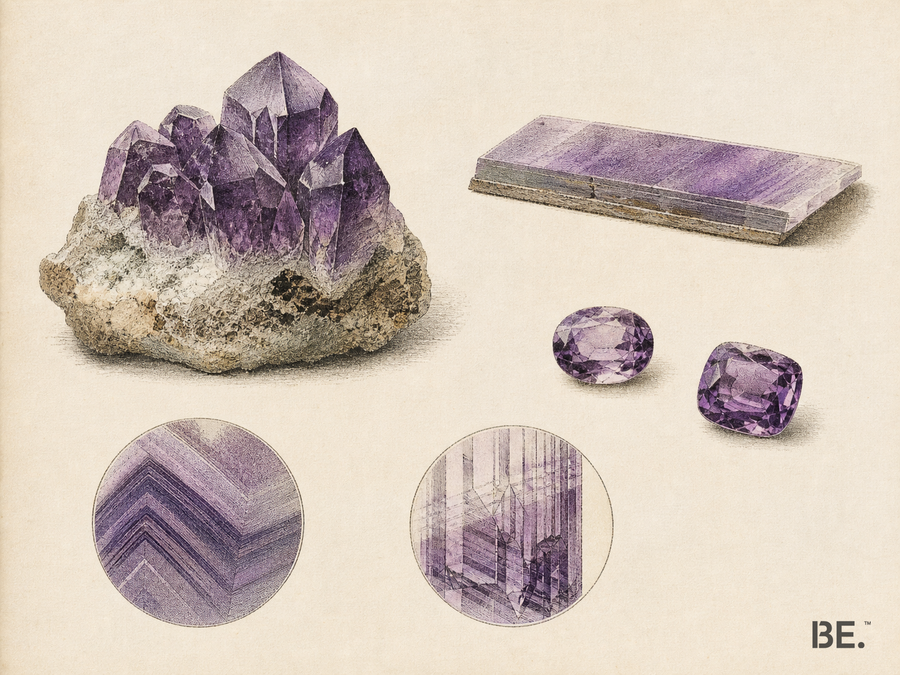
Lab-Grown vs Natural Amethyst: What Actually Changes?
Lab-grown amethyst is synthetic quartz, not purple glass. Compare chemistry, growth origin, visual limits, laboratory separation and disclosure.
Read field note →Journal · Field notes
Field notes for understanding materials, comparing stones, choosing size, and caring for what you wear.
01
Lab-grown amethyst is synthetic quartz, not purple glass. Compare chemistry, growth origin, visual limits, laboratory separation and disclosure.
Read field note →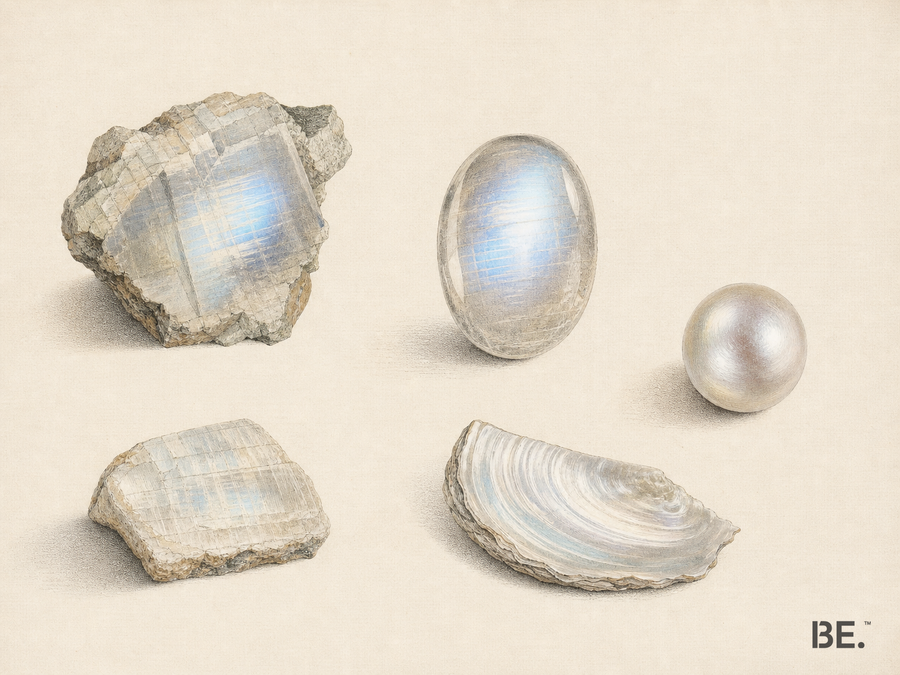 02
02
Moonstone is feldspar with adularescence; pearl is a biogenic gem with nacreous lustre. Compare light, hardness, care and bracelet use.
Read field note →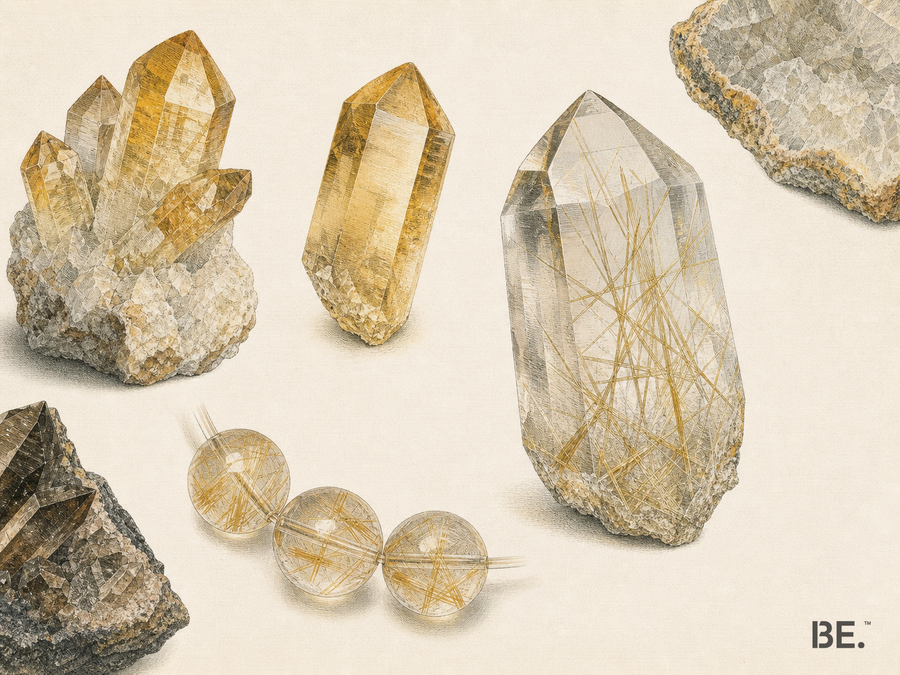 03
03
Citrine carries yellow body colour; golden rutilated quartz contains visible rutile needles. Compare structure, quality, treatment and buying value.
Read field note →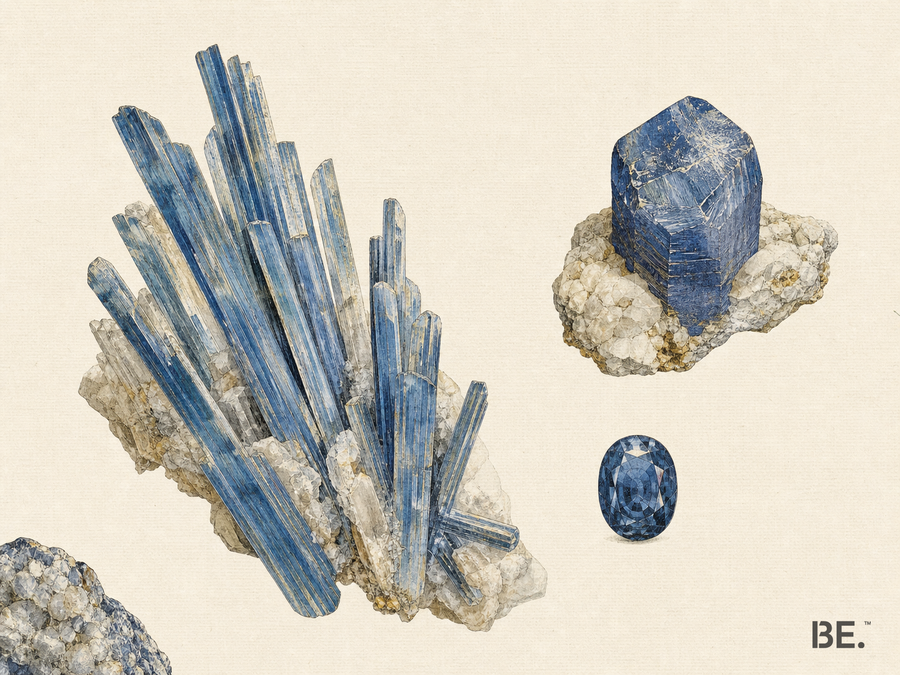 04
04
Kyanite and sapphire can share a deep blue, but differ in composition, structure, directional hardness, cleavage, treatment and wear.
Read field note →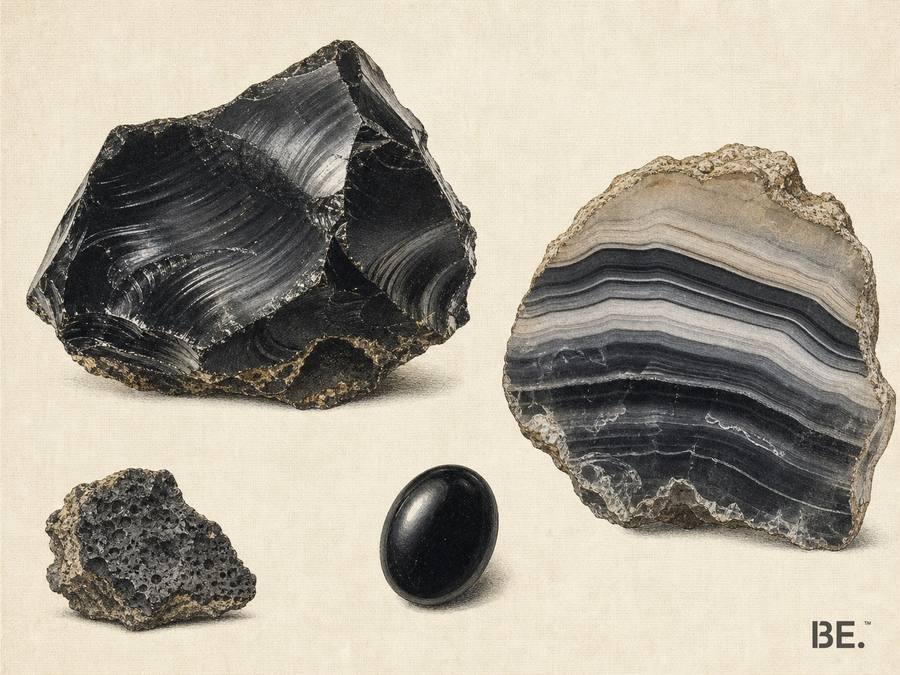 05
05
Obsidian is volcanic glass; jewellery onyx is parallel-banded chalcedony. Compare structure, hardness, black colour, dye disclosure and safe checks.
Read field note →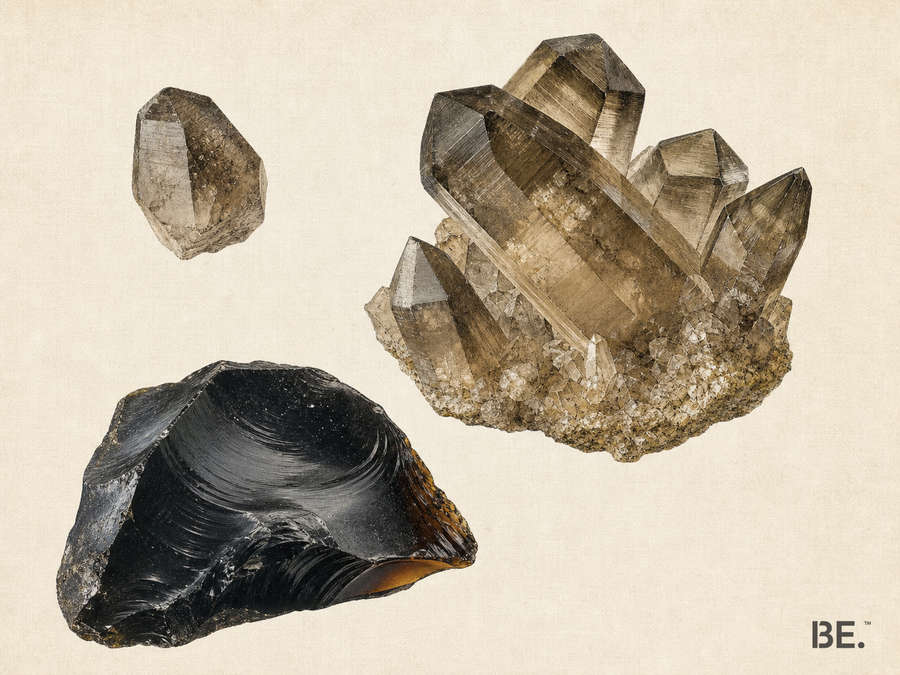 06
06
Smoky quartz is crystalline SiO₂; obsidian is natural volcanic glass. Compare structure, appearance, hardness, fracture and bracelet wear.
Read field note →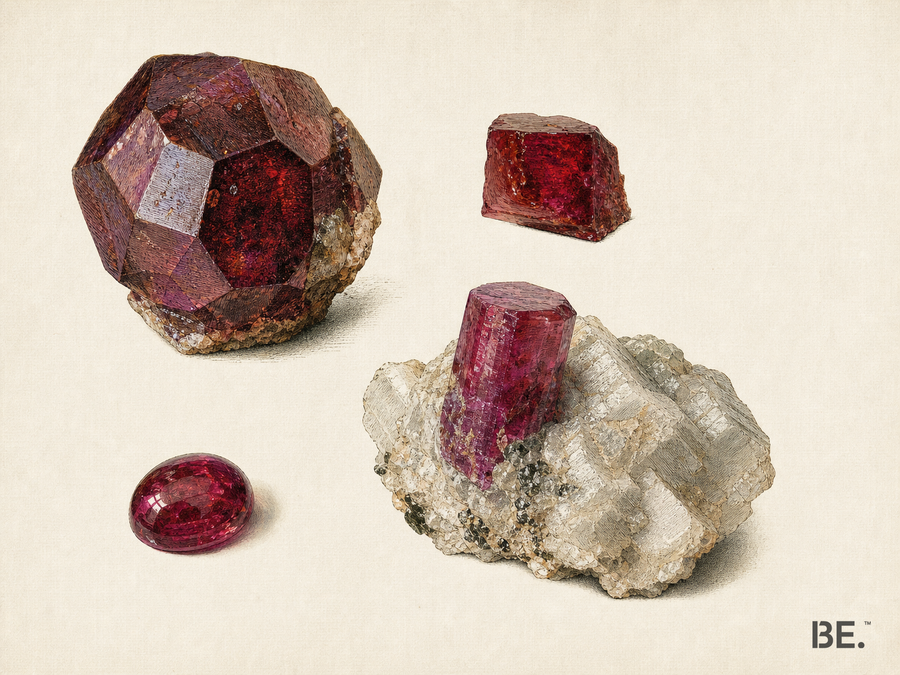 07
07
Garnet is a silicate mineral group; ruby is red corundum. Compare identity, hardness, visual overlap and what to ask before buying.
Read field note →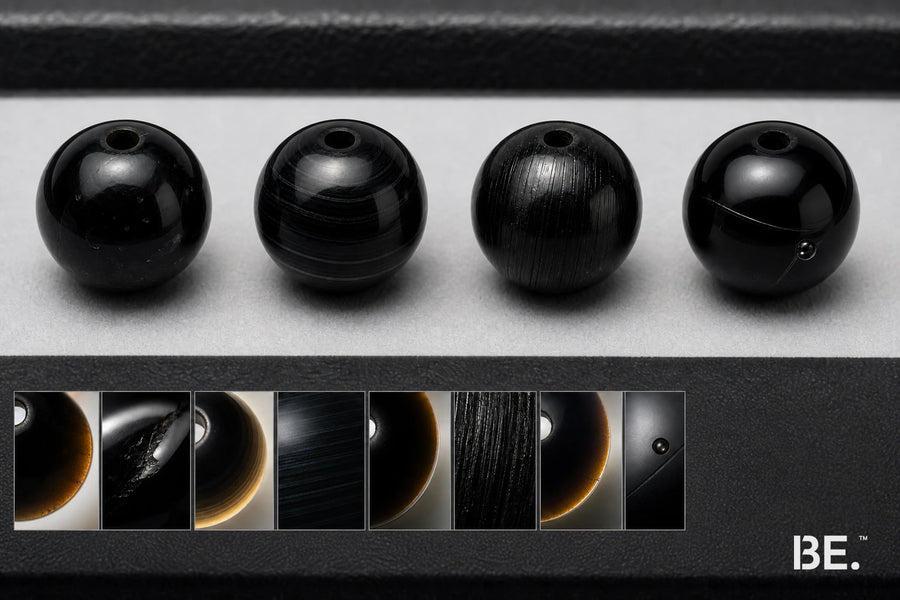 08
08
Black colour is not an identification. Compare obsidian, onyx, black tourmaline and manufactured glass through lustre, texture, edge light, internal features and laboratory limits.
Read field note → 09
09
Moonstone is feldspar with adularescence; retail opalite is commonly manufactured glass with an even blue-orange glow. Compare structure, optical movement and disclosure safely.
Read field note → 10
10
Cherry, berry and strawberry quartz are not interchangeable mineral names. Learn which labels commonly describe glass, which can describe natural included quartz and what disclosure to request.
Read field note → 11
11
Amethyst and garnet both make deep-toned bracelets, but one is quartz and one a silicate group. Colour, hardness, care and price compared.
Read field note → 12
12
Black vs golden rutilated quartz: both are rutile needles in quartz, separated by iron content. Why the colour differs, what each looks like, and how to choose.
Read field note →