

The Prism
The Prism — Augen offen, trotzdem verliebt.
Für den Blick auf Struktur, ohne Wärme zu verlieren. Nadeln, Mineralpigment und Wachstumslinien machen das Material aus mehr als einem Winkel lesbar.
GRÜNER PHANTOMQUARZ · CITRIN · GOLDRUTILQUARZ · MEHRFARBIGER RUTILQUARZ · HÄMATOIDQUARZ
The Prism · Aktuelle Stücke
Struktur, sichtbar gemacht.
Fünf Materialprotokolle, jedes zeigt, wie innere Struktur verändert, was das Licht offenlegt: grüner Phantomquarz, Citrin, Goldrutilquarz, mehrfarbiger Rutilquarz und Hämatoidquarz.


Materialprotokoll
Wissen, was das Licht verändert.
Grüner Phantomquarz bewahrt unterbrochenes Wachstum, Citrin trägt eisenbedingtes Gelb, goldener und mehrfarbiger Rutil lenken Licht um, und Hämatoidquarz hält Eisenoxid im Quarz. Prism liest Einschlüsse als Protokoll, nicht als Fehler.
Grüner Phantomquarz
Frühere Kristallflächen bleiben im späteren Quarzwachstum sichtbar; unterbrochenes Wachstum wird als geschichtete innere Struktur lesbar.
Citrin
Gelber Quarz, gelesen über Körperfarbe, Klarheit und Behandlungsprotokoll. Der Behandlungsstatus wird pro Lot offengelegt und nicht aus dem Aussehen abgeleitet.
Goldrutilquarz
Quarz mit goldenen Rutilnadeln. Ihre Richtung, Dichte und Sichtbarkeit wechseln von Perle zu Perle und werden als Materialstruktur bewertet.
Mehrfarbiger Rutilquarz
Quarz mit Rutilnadeln in verschiedenen Mineraltönen; Richtung, Kontrast und Dichte bleiben von Perle zu Perle sichtbar.
Hämatoidquarz
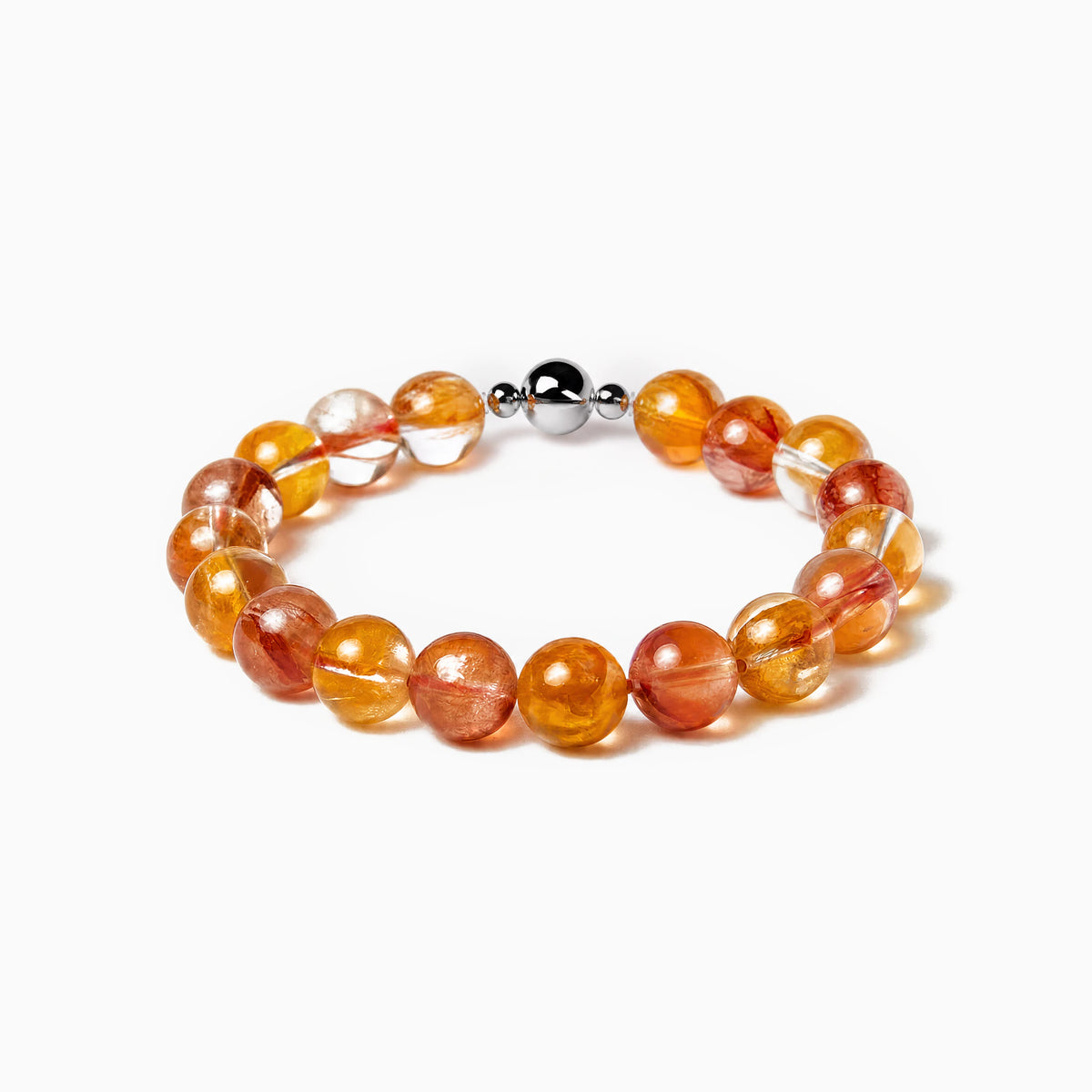
Quarz mit rot- bis orangefarbenen Eisenoxid-Einschlüssen im Wirtskristall, keine Oberflächenfarbe und kein aufgetragenes Pigment.
Tragehinweis
Lassen Sie die innere Struktur die Arbeit machen.
Schwarze Kleidung, nackte Haut und direktes Licht geben Nadeln, Pigment und klaren Fenstern genug Kontrast, um sichtbar zu bleiben.
Halten Sie anderen Schmuck schlicht. Ein innerlich komplexer Stein kann das ganze Blickfeld tragen, ohne dekorative Farbe um sich herum.

Crystal 4T™
Jeder Stein wird vor der Fertigung bewertet.
Lot-ID
Das fertige Stück bleibt mit seinem Materiallot verknüpft.
Herkunftsstufe
Angegeben nur so weit, wie das Protokoll es belegt.
Behandlung
Pro Lot offengelegt; Unbekanntes bleibt unbekannt.
The Prism · Fragen zum Material
Fragen zum Material.
Materialnotiz lesen
The Prism bricht das Licht. Seine Steine sind gewählt, weil das Innere lesbar bleibt: Rutilnadeln, Eisenoxid-Pigment, Phantom-Wachstumsebenen und eisenbedingtes Gelb im Quarz.
Der Einschluss ist der Punkt. Grüner Phantomquarz bewahrt unterbrochenes Wachstum; goldener und mehrfarbiger Rutil machen innere Richtung sichtbar; Hämatoidquarz trägt Mineralpigment statt Oberflächenfarbe.
Jedes Stück wird nach Crystal 4T™ bewertet und verlässt das Studio mit einem Stone Origin Record, der Behandlung, Lot und Herkunft auf der geprüften Stufe festhält.
01 Sind Einschlüsse Fehler?
In dieser Serie sind sie die Identität. Die Crystal 4T™-Bewertung fragt, ob Einschlüsse lesbar und strukturiert sind, nicht, ob sie existieren.
02 Was unterscheidet ein Phantom von Rutilquarz?
Ein Phantom hält eine pausierte Wachstumsfläche als Schicht oder Kontur fest. Rutilquarz enthält nadelförmige Einschlüsse, die entstanden, bevor der Quarz sie umschloss.
03 Ist BE. Citrin gebrannt?
Der Behandlungsstatus wird pro Lot offengelegt. Natürlicher und gebrannter Citrin dürfen nicht mit derselben Herkunftsgeschichte beschrieben werden.
Journal · Neue Notizen
Neue Field Notes.
Materialnotizen, Auswahlentscheidungen und praktische Protokolle aus dem BE. Journal.
 01
01
Real vs Fake Rutilated Quartz: Coatings, Glass and Safe Checks
Real vs fake rutilated quartz: natural rutile needles sit inside the quartz. How glass wires, coatings and composites show, and which checks are safe.
Field Note lesen 02
02
Prehnite vs Jade vs Peridot: Three Pale Greens Told Apart
Prehnite, jade and peridot share a pale green. A loupe gives clues: cloudy glow, compact grain or doubled edges. Toughness, treatments, safe screening.
Field Note lesen 03
03
Real vs Fake Moonstone: How to Tell if Moonstone Is Real
Moonstone is feldspar with a glow that moves as the bead turns. Screen opalite, resin, chalcedony and coated stones at home; know when a...
Field Note lesen 04
04
Hematoid Quartz vs Garnet: Two Reds from Two Different Causes
Hematoid quartz is quartz with iron-oxide particles inside; garnet is red through its own chemistry. Hardness, weight, light, fakes and matching, compared.
Field Note lesen