What separates a geological treasure from an ordinary mineral specimen is the intersection of three factors: exceptional formation conditions, material rarity, and visual individuality. Heritage-grade crystals are not manufactured — they are the unreproducible product of specific pressure, temperature and mineral chemistry sustained over millions of years. Once removed from the earth, that exact configuration does not form again.
The word 'treasure' applied to crystals is not metaphor. It describes a specific material condition: something that required rare circumstances to exist, cannot be replicated, and carries a record of its formation visible in its structure. Understanding what makes a crystal genuinely rare clarifies why the difference between heritage and commercial grade is not aesthetic preference — it is a material distinction with geological roots.
The Problem of Formation Conditions
Most crystals form only when multiple geological variables align simultaneously: the right mineral-bearing solution, at the right temperature and pressure, in a cavity or fracture of sufficient size, undisturbed for long enough that large, well-formed crystals can develop. Change any one variable and the result changes — smaller crystals, cloudy material, no crystal growth at all.
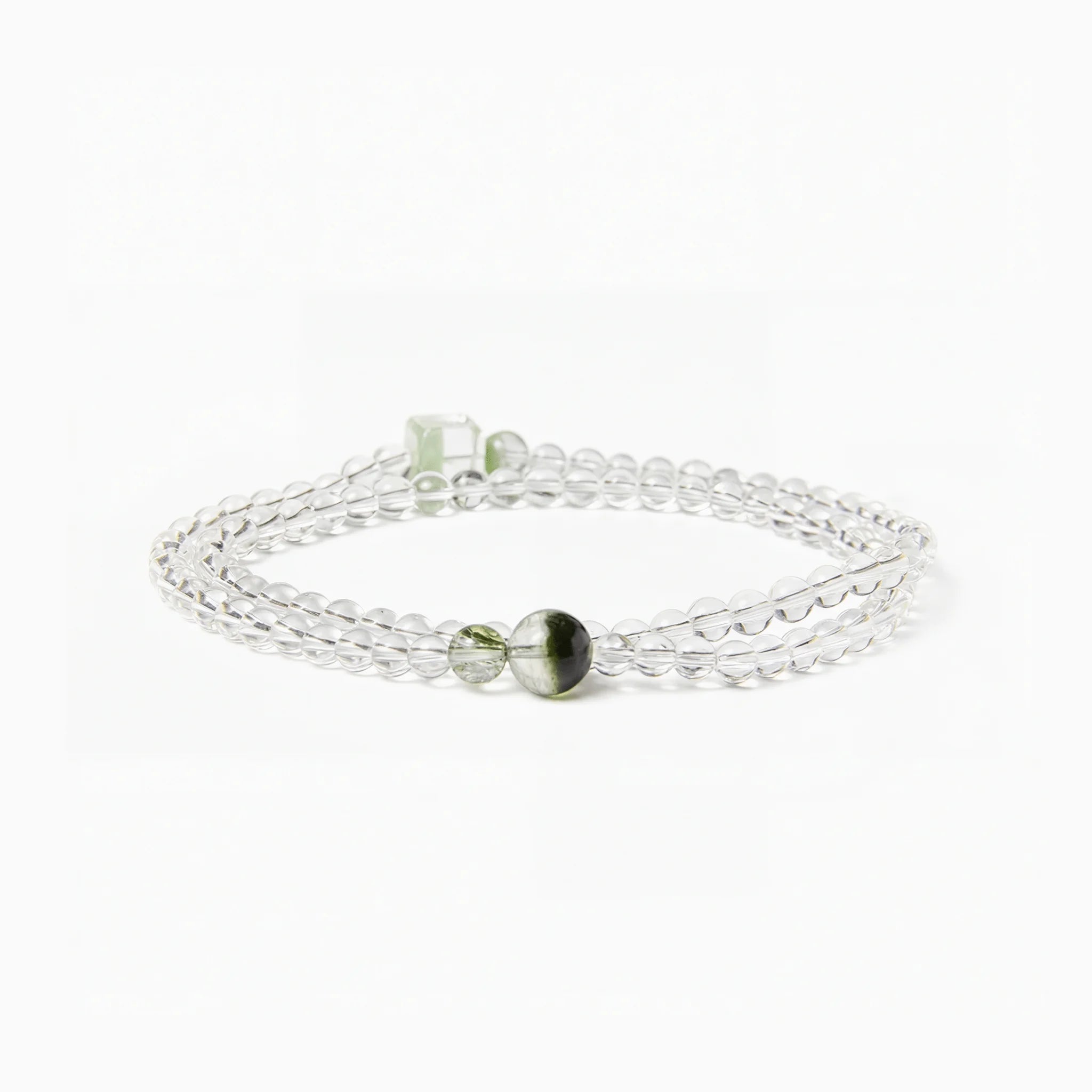
Consider what is required to produce a piece of high-grade green phantom quartz: first, clear quartz must begin growing in a stable hydrothermal environment. Then, growth must pause while chlorite or another chromium-bearing mineral coats the crystal surface — a separate mineralising event. Then, quartz growth must resume, encapsulating the phantom layer without fracturing or clouding the surrounding material. Then, the entire assembly must remain undisturbed while the host rock cools. Each stage eliminates most potential specimens.
The commercial market is dominated by material that formed under less demanding conditions: cloudy quartz, sparse inclusions, uniform colour without depth. This is not inferior in any moral sense — it is simply what most geological environments produce most of the time. Heritage-grade material represents the rare cases where conditions aligned.
Geological Time as Material Value
A crystal bracelet bead has existed longer than any human civilisation. The rutile inclusions in a heritage-grade rutilated quartz strand formed before the continents reached their current positions. This is not a selling point — it is a material fact that changes how the object is understood.
The financial value assigned to heritage crystals in collector markets reflects, in part, the acknowledgement that the time required to produce them cannot be compressed or purchased. A synthetic crystal can be grown in a laboratory in weeks. It can match or exceed natural material in clarity. What it cannot replicate is the geological event — the specific mineral chemistry, the specific pressure and temperature trajectory, the specific inclusion pattern produced by conditions that existed once and will not repeat.
Heritage Grade: The Distinction That Matters
Commercial-grade crystals are cut from widely available rough where inclusions are sparse, clarity is moderate, and the stone's visual character is uniform. Heritage-grade material is sourced from rough where the defining qualities of the stone — inclusion density, phantom completeness, colour saturation — are exceptional enough that the stone reads clearly as singular. The distinction is visible without magnification.
The practical tests are simple. In rutilated quartz: are the threads dense enough and well-distributed enough to read from arm's length? In phantom quartz: is the phantom complete, positioned visibly within the stone, and set against clear rather than cloudy quartz? In hematoid quartz: are the iron formations distributed through the stone rather than limited to surface staining?
Heritage grade is not a certification or a standard with formal boundaries. It is a description of material quality that reflects how the stone reads as an object — whether the defining geological feature that makes the stone worth having is present, prominent and well-formed. Most material available at most price points is not heritage grade. That is what makes heritage grade worth specifying.
What This Means for the Collector
Collecting heritage-grade crystals is the practice of acquiring unreproducible geological events in wearable form. Unlike manufactured goods, where quality can be standardised and replicated, each heritage-grade piece is the sole surviving result of a specific formation event. The next piece of the same stone will carry different inclusions, a different internal landscape, a different record.
This is also why comparing crystals by price per gram or per bead is incomplete. The relevant question is not what the material weighs but what the specific configuration of that material represents — and whether that configuration exists in enough similar pieces to make it unspecial, or only in a small number of exceptional specimens where the formation conditions aligned precisely enough to produce something worth keeping.
Frequently Asked Questions
What makes a crystal 'heritage grade'?
Heritage grade describes material where the stone's defining characteristic — inclusions, phantom, colour depth — is of sufficient quality and prominence that the piece reads as exceptional without magnification. It is a descriptor of material quality rather than a formal certification standard.
Are natural crystals always better than synthetic?
Synthetic crystals can exceed natural material in optical clarity and consistency. What they cannot replicate is geological formation — the specific inclusion patterns, formation events and material individuality that make natural heritage-grade crystals collectors' objects rather than optical components. The distinction matters depending on what you value in the stone.
How do I know if a crystal is genuinely rare?
Rarity in crystals is a function of formation conditions, not marketing. Ask what makes this specific stone visually distinct, whether that quality is common in available material, and what the geological conditions required to produce it were. Stones like fine emerald phantom quartz or dense-thread rutilated quartz are rare because the formation conditions that produce them are genuinely uncommon — not because they have been positioned as rare.
![The Spectrum Sequence, bracelet on white background BE. [spectrum-sequence-be]](http://thebeworld.com/cdn/shop/files/bracelets-rainbow-seven-gemstones-bracelet-balance-be.webp?v=1773333972&width=2048)
Partager:
How Crystal Colors Form: The Chemistry Behind the Stone
How to Care for Your Crystal Jewelry: Cleaning, Storage & Wear